Entwickler Intelligence
Ambient Intelligence for Learning Systems
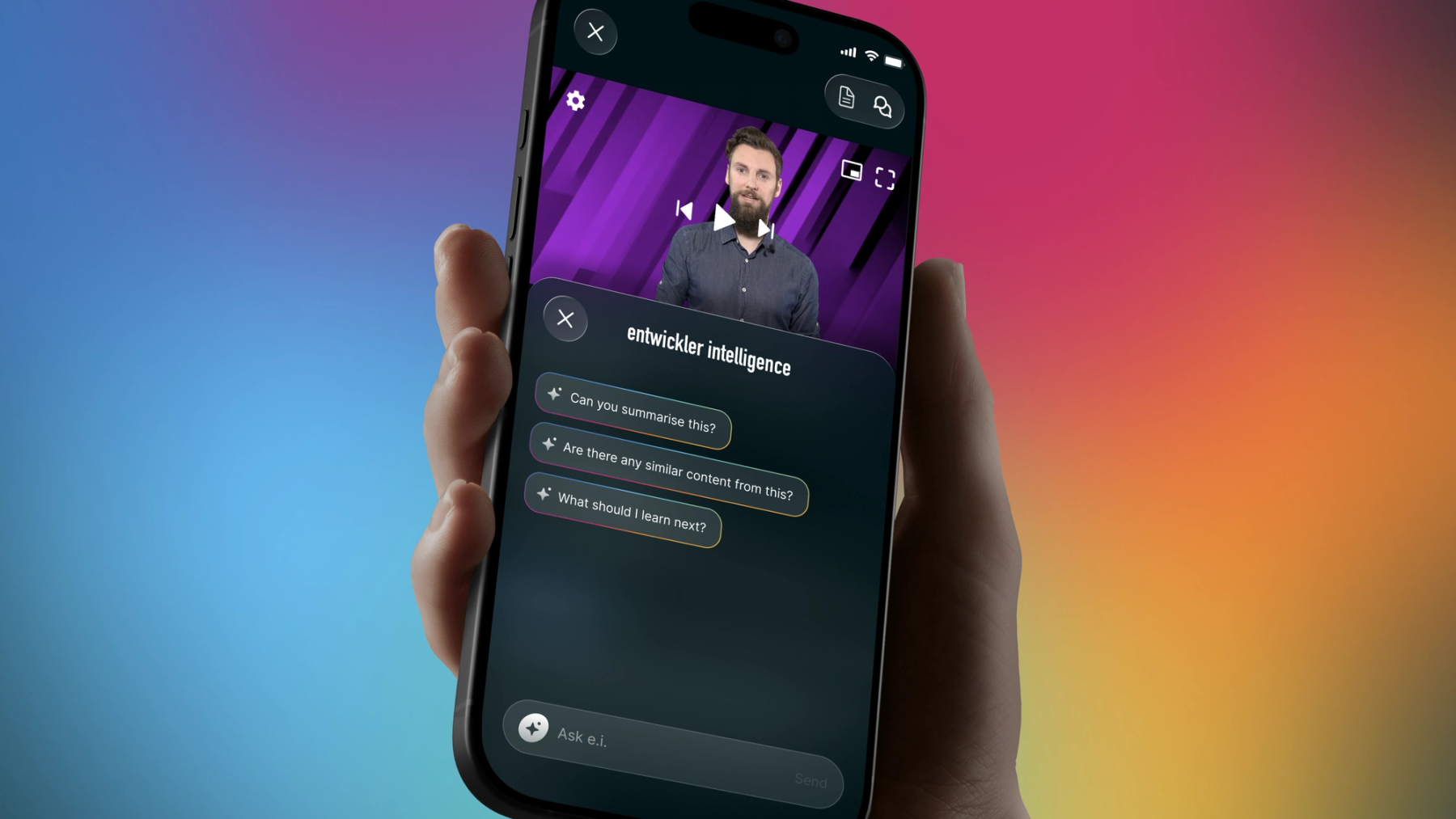
What does it take to integrate natively AI into a content platform ecosystem?
Designer and director with a decade of experience leading digital and physical products, branding, and cultural research, from concept through production.
Ambient Intelligence for Learning Systems
What does it take to integrate natively AI into a content platform ecosystem?
S&S Media Group serves a vast community of software professionals through platforms like Entwickler.de and devm.io.
Entwickler.de operates a vast ecosystem of developer-focused brands, conferences, and educational content — spanning over three decades of material across web, mobile, live events, onsite and online.
The challenge was structuring abundance. Twelve distinct community verticals (Java, DevOps, AI, JavaScript, etc.) coexisted alongside live conferences, talks, articles, tutorials. Each brand has heritage, identity, and loyal users.
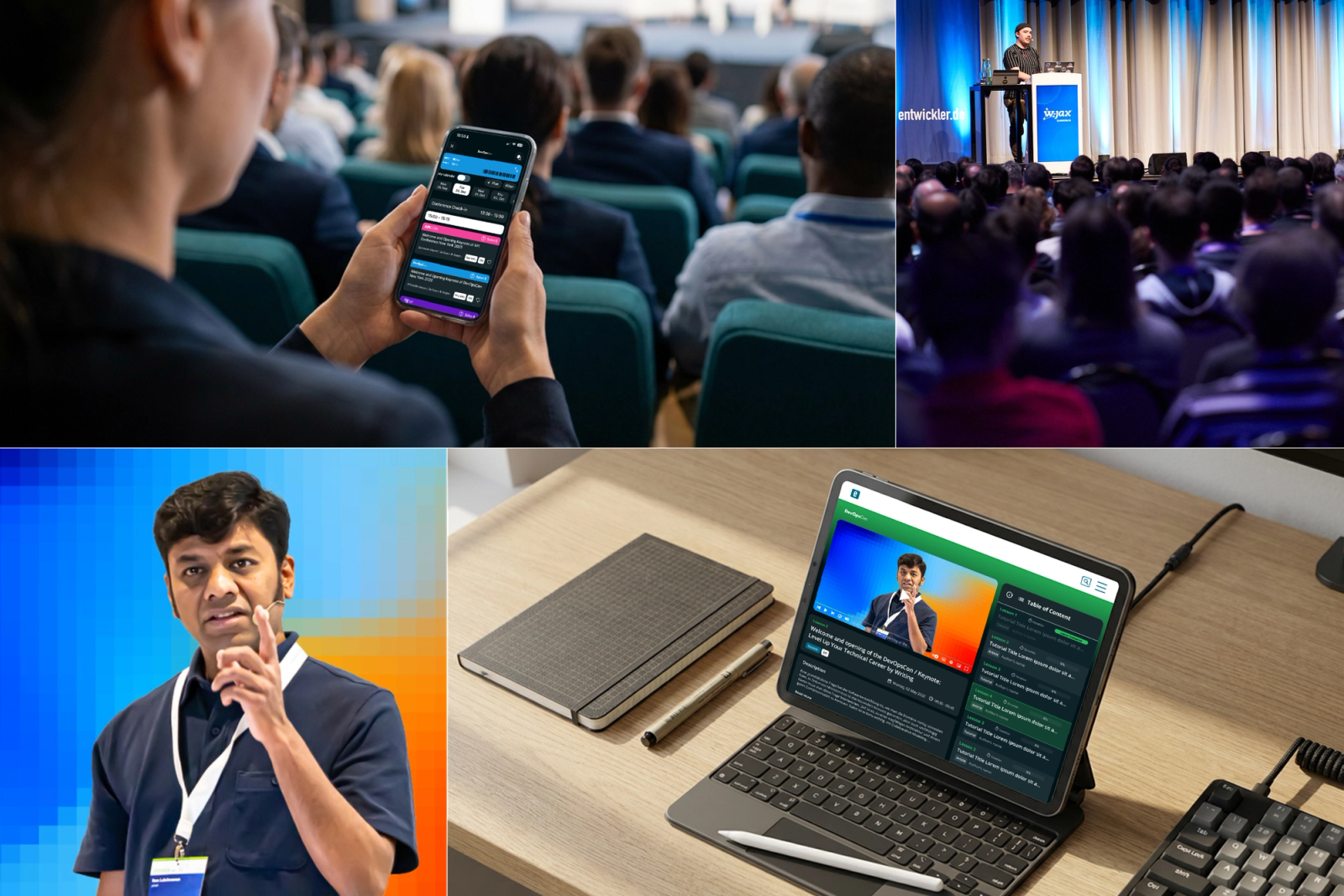
Enwickler App for on-site and online events.
In 2025, I designed Entwickler Intelligence, an AI assistant. It aimed to make intelligence ambient, not just a chatbot.
My role was to craft an experience that felt both intelligent and intuitive, merging natural language interaction with a dense technical environment.
We built a conversational RAG layer inside the platform, so the assistant could answer from the event's own content rather than generic knowledge. I mapped the journeys of readers and attendees, benchmarked how comparable assistants handle guidance, and prototyped the micro-interactions that keep it present without taking over.
From there I carried the work end to end, through native production in Swift and Jetpack Compose, alongside the developers.
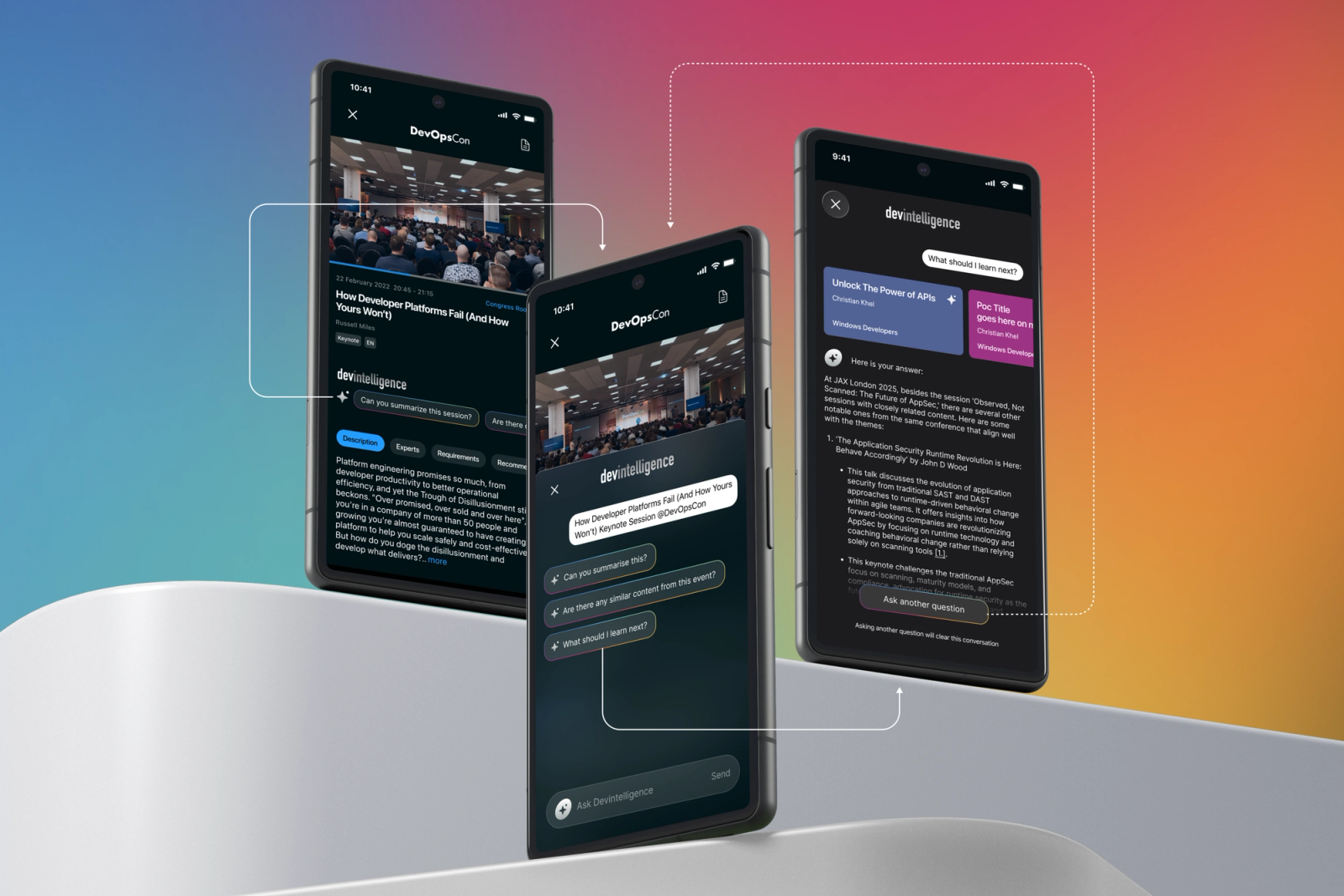
Session detail contextual AI RAG experience flow
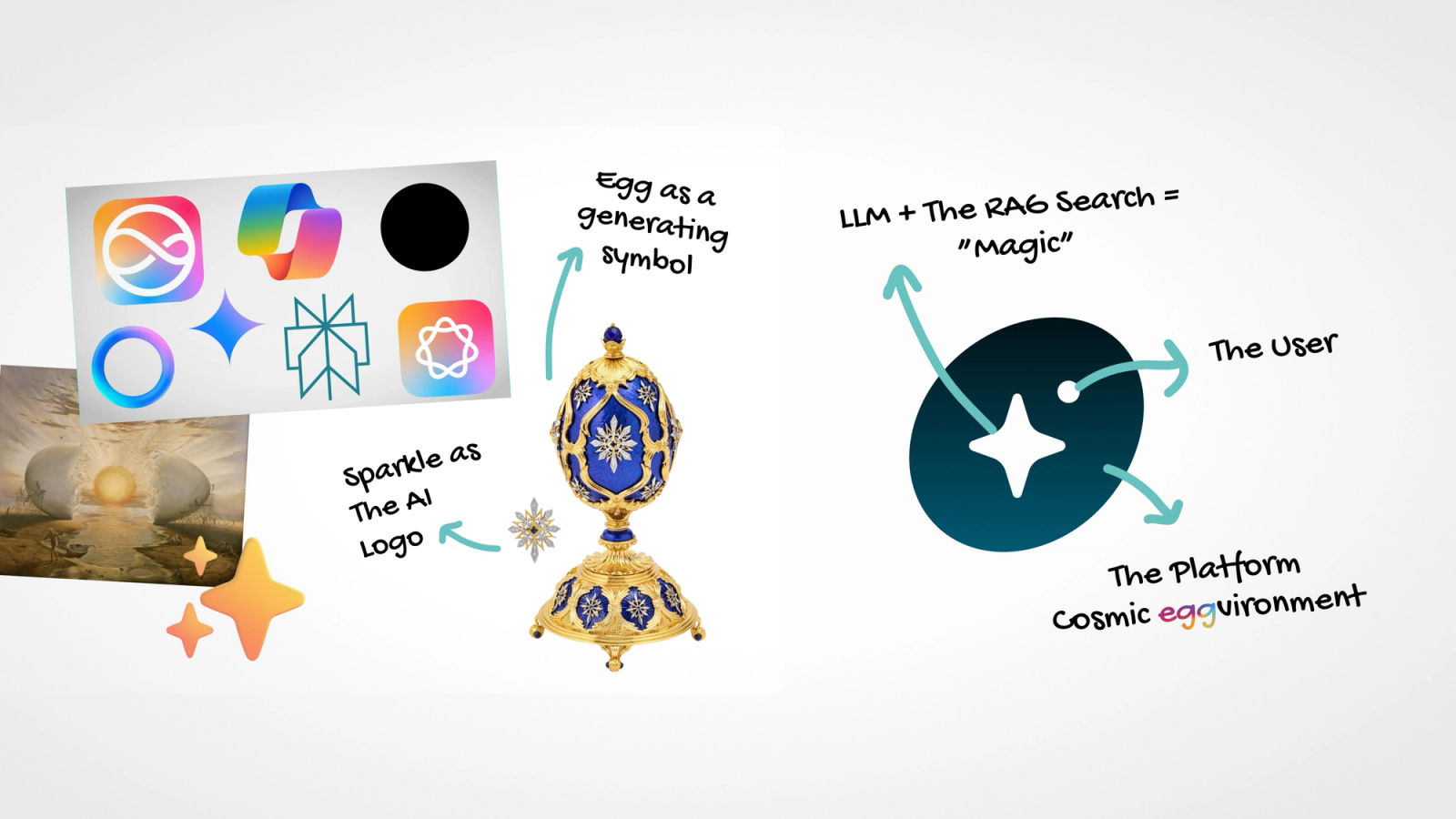
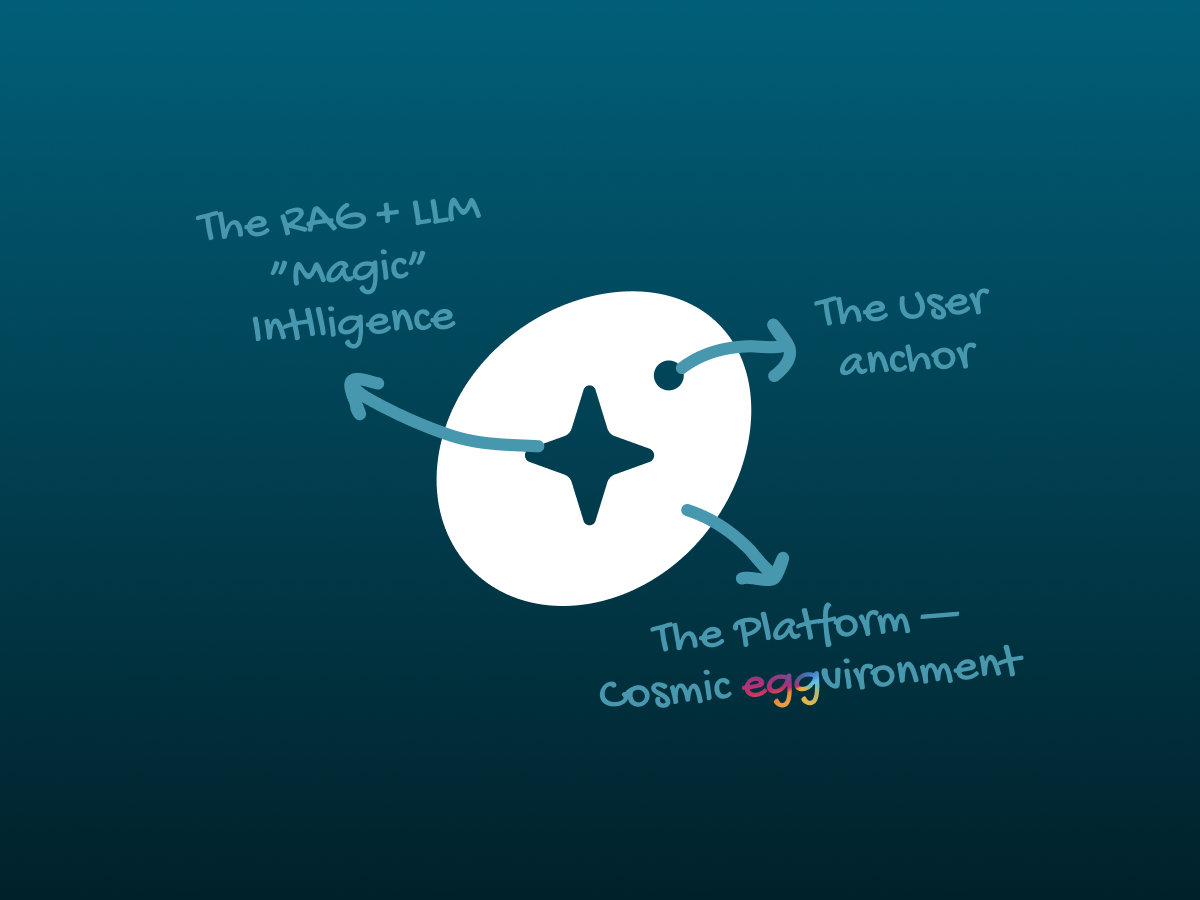
By playing with the German word for Egg "Ei" and its similarity to the acronym "AI," we chose the Cosmic Egg as a metaphor to develop a cohesive and engaging visual system that guides the user experience.
 01
01The Cosmic Egg metaphor visually represents AI's transformative journey: the Sparkle embodies AI's essence, while the Egg symbolize over the centuries its generative potential and state changes.
 02
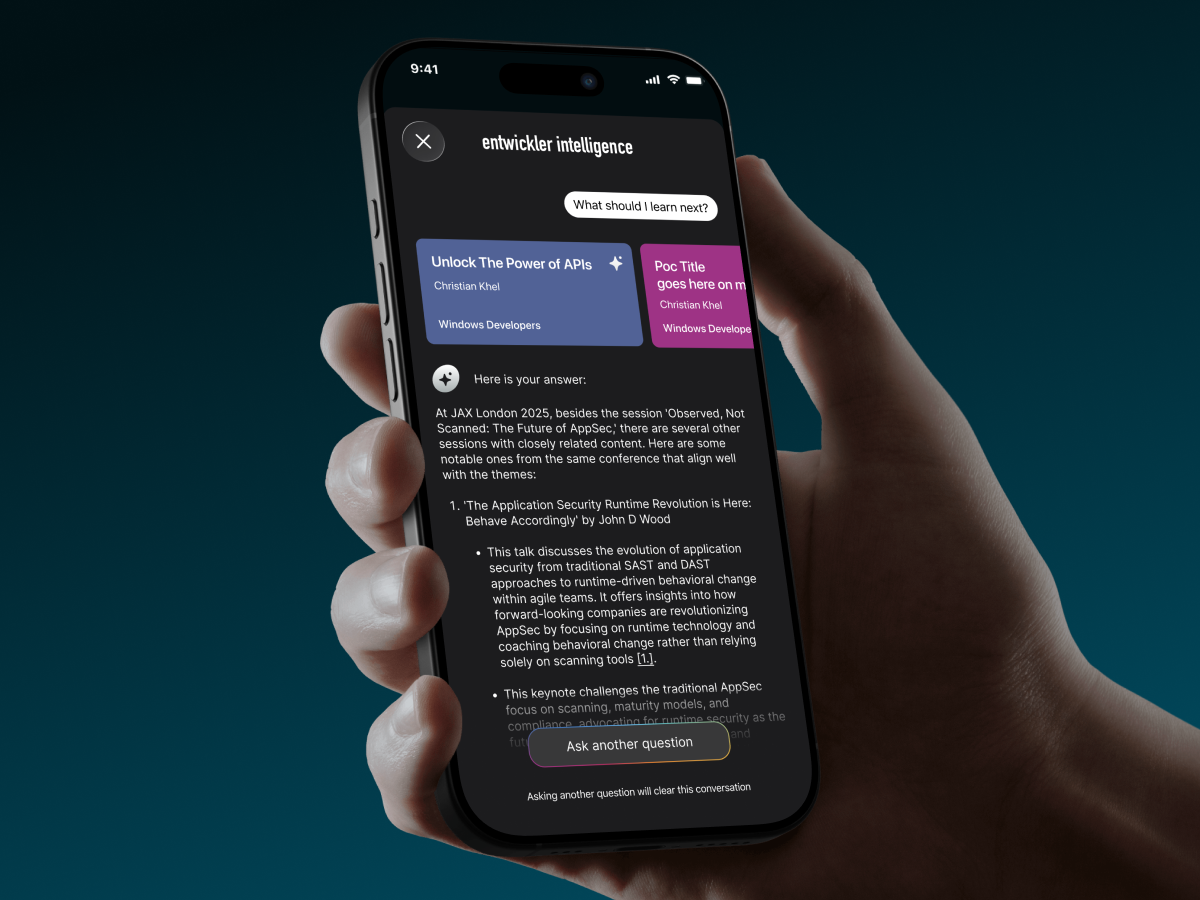
02Implemented a lightweight system for querying summaries, comparisons, and references – all structured around intent, not chat history.
 03
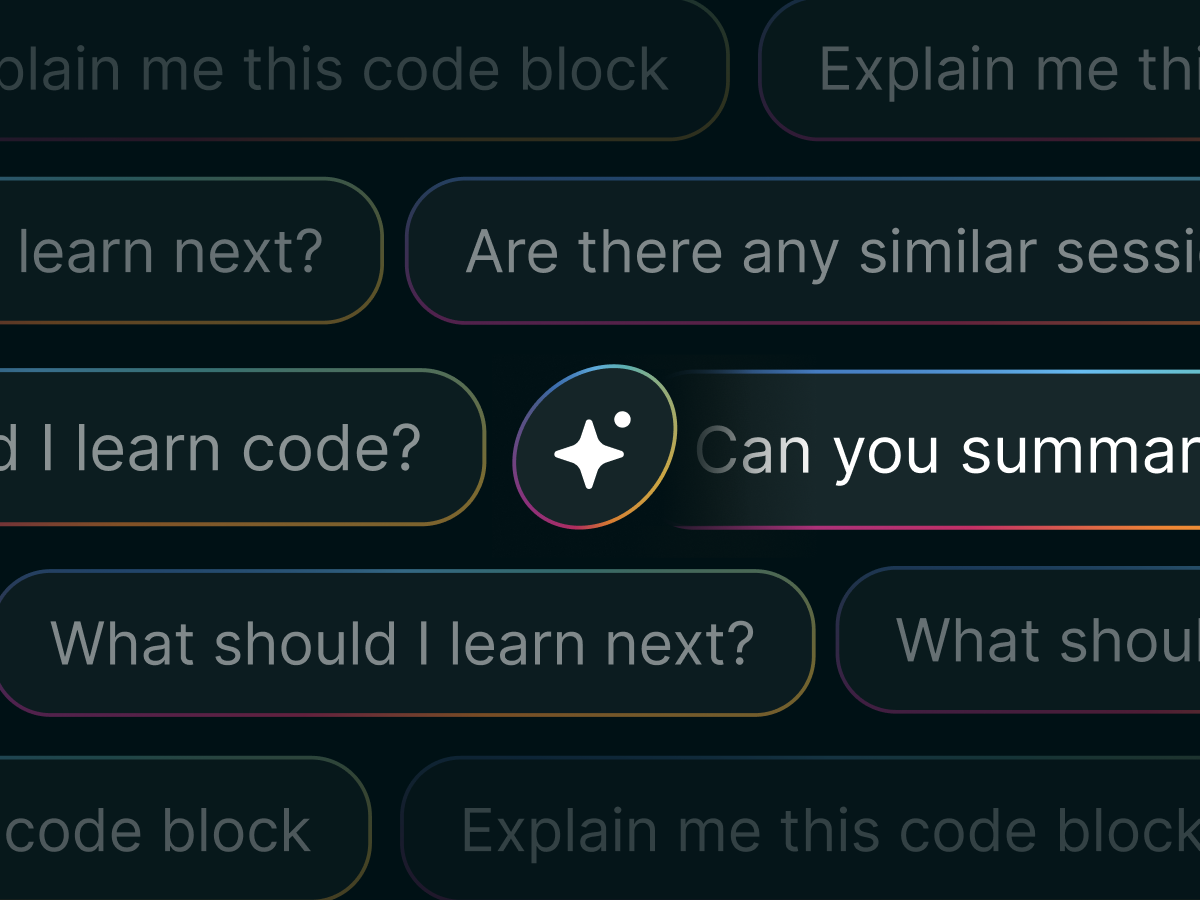
03Integrated context-aware prompts seamlessly, allowing participants to ask real-time questions while maintaining the natural flow.